How To Spot Hidden Plumbing Leaks Before They Cause Home Damage

Why Hidden Leaks Deserve Quick Attention
Hidden plumbing leaks rarely announce themselves with a flooded room. A loose fitting beneath a kitchen sink, a pinhole in a supply line, or a failing pipe joint behind a wall can release small amounts of water for days or weeks. Homeowners who notice early warning signs can often avoid a much larger repair. When the cause is unclear, experienced residential plumbing services in Shreveport, LA, can help locate the source before moisture spreads into finished areas. Even a slow leak can soak wood, drywall, insulation, subflooring, and cabinet bases over time. Because water can travel along pipes, framing, or flooring, the first stain may appear several feet away from the actual leak. That makes routine inspections especially important in bathrooms, kitchens, laundry rooms, and utility spaces. Leaks are also a water-use problem, not just a property-damage problem. The EPA notes that household leaks can waste substantial amounts of water each year, and its guidance for checking for leaks at home identifies toilets, faucets, valves, and pipe fittings as common trouble spots. A small drip may seem harmless, but ongoing water loss can add up on a monthly utility bill.
Common Warning Signs Inside the Home
Watch for small changes that do not have an obvious explanation. A leak can remain out of sight while humidity and trapped moisture slowly affect surrounding materials.
- Brown, yellow, or gray discoloration on a ceiling or wall.
- Paint or wallpaper that bubbles, cracks, peels, or feels loose.
- Flooring that becomes soft, warped, swollen, or uneven.
- A persistent musty smell near cabinets, closets, bathrooms, or laundry areas.
- New mold or mildew growth outside normal humid areas.
- Dripping, hissing, or running-water sounds when every fixture is turned off.
Check the Water Meter for Clues
A water meter test is one of the simplest ways to find out whether water may be moving through the plumbing when no one is using it. It does not identify the exact location, but it can confirm that further inspection is worthwhile.
- Turn off faucets, showers, dishwashers, washing machines, ice makers, and outdoor water use.
- Make sure toilets are not actively refilling.
- Write down the meter reading or take a clear photo of it.
- Wait at least two hours without using water.
- Check the meter again. A changed reading can indicate a leak.
Inspect High-Risk Areas First
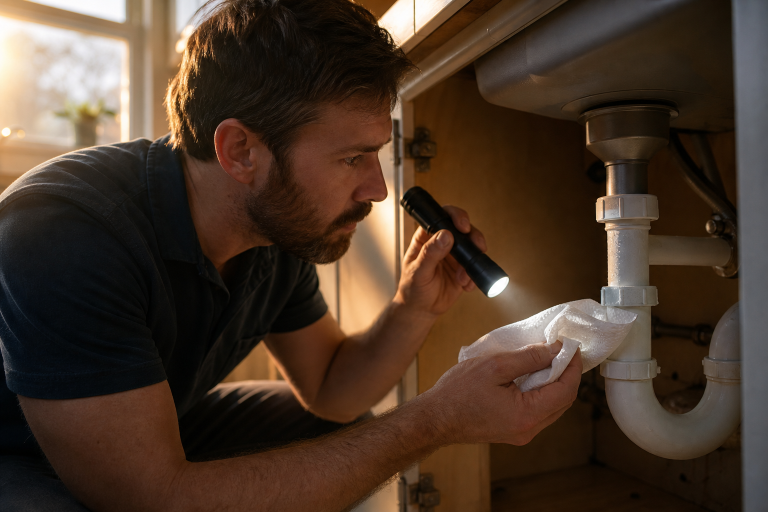
Start with places where plumbing connections are visible and easy to reach. Bring a flashlight, and run a dry paper towel around fittings to spot very small amounts of moisture.
- Under sinks: Check supply lines, shutoff valves, drain connections, garbage disposal fittings, and P-traps.
- Behind toilets: Look around the supply line, tank bolts, shutoff valve, and floor at the base of the toilet.
- Near water heaters: Inspect the tank, fittings, temperature-pressure relief valve, drain valve, and floor beneath the unit.
- Behind washing machines: Examine hose connections for rust, bulges, cracks, or dampness.
- Around dishwashers: Check cabinet edges, flooring, and the area below the appliance door.
- In unfinished spaces: Look below floors, around exposed pipes, and near foundation walls for wet spots or mineral deposits.
Do Not Ignore a High Water Bill
A sudden increase in water use can signal a running toilet, a hidden supply leak, a leaking irrigation line, or an outdoor spigot problem. Compare the current bill with the same season last year, when possible. Consider whether guests, new appliances, landscaping changes, or hotter weather explain the difference. If there is no clear reason, repeat the meter test and inspect common leak points.
Hidden Toilet Leaks Can Waste Water Quietly
A worn flapper or faulty fill valve may allow water to move from the toilet tank into the bowl without leaving a puddle on the bathroom floor. Test the toilet by adding a few drops of food coloring to the tank, waiting 10 to 15 minutes without flushing, and checking the bowl. If color appears in the bowl, the toilet likely leaks. Prevention matters here. Periodically inspect toilet components, tighten loose supply connections, replace aging appliance hoses, and keep sink cabinets dry enough that a new drip is easy to notice. Practical steps for preventing water damage from household fixtures also include checking vulnerable connections before they become an emergency.
Signs of a Leak Behind a Wall or Under a Floor
Leaks in concealed plumbing need prompt attention because the affected area may grow without being visible. Look for warm or cool spots that do not match the rest of the room, buckling floorboards, recurring discoloration, soft drywall, or persistent dampness with no apparent source. Unusual insect activity can also occur near consistently wet materials. Do not assume a stain is directly above or beside the leak, since water often follows the path of least resistance.
What To Do When a Leak Is Found
- Turn off the fixture’s local shutoff valve if the leak is isolated and accessible.
- Shut off the main water supply if the source is unclear, water is flowing quickly, or several fixtures are affected.
- Move rugs, furniture, boxes, and electronics away from the wet area.
- Take photos before removing damaged materials, particularly if an insurance claim may be necessary.
- Dry accessible surfaces with towels and fans when it is safe to do so.
- Arrange an inspection if water entered a wall, ceiling, floor, foundation area, or electrical location.
When a Professional Leak Check Makes Sense
Call for professional help when the meter test shows water loss but no visible fixture leak is present, when moisture appears beneath flooring or inside a wall, or when a basic repair does not stop the problem. Sewer-related issues, water heater leaks, flooding, exposure to sewage, fast-moving water, and electrical hazards also require immediate professional attention. Plumbers may use pressure testing, acoustic equipment, thermal imaging, or inspection cameras to narrow down the source while minimizing unnecessary openings in walls or floors.
Simple Leak Prevention Habits for 2026
- Inspect visible plumbing connections every few months.
- Test toilets for silent leaks at least once or twice a year.
- Replace damaged appliance hoses before they fail.
- Keep under-sink cabinets uncluttered and dry.
- Know where the home’s main water shutoff valve is located.
- Consider leak sensors near water heaters, washing machines, toilets, and sinks.
- Keep records of plumbing repairs, fixture replacements, and unusual water use.
Frequently Asked Questions
Can a leak exist without a water stain?
Yes. Leaks under floors, inside walls, and within toilet tanks may not create a visible stain right away.
How long should a water meter test take?
A two-hour test can reveal many active leaks. A longer test may help identify very slow or intermittent water loss.
Does a plumbing leak always cause a musty smell?
No. Condensation, poor ventilation, roof leaks, and groundwater moisture can create similar odors. The source should be checked before assuming plumbing is responsible.
Can a small leak cause serious damage?
Yes. Moisture trapped in enclosed spaces can weaken materials and encourage mold growth even when the leak itself is minor.
Conclusion
Hidden plumbing leaks often begin with subtle clues, including a musty odor, a small stain, warped flooring, peeling paint, damp cabinets, or an unexplained increase in the water bill. Because many supply and drainage pipes are located behind walls, beneath floors, or inside ceilings, a leak can continue for weeks before obvious damage appears. Regular checks of visible plumbing, toilets, faucets, and the water meter can help homeowners notice unusual changes early. Pay attention to areas around water heaters, washing machines, sinks, and appliances where connections may gradually loosen or deteriorate. If water may be moving inside a wall, ceiling, floor, or foundation, quick leak detection can help identify the source before moisture causes more serious structural damage, mold growth, damaged finishes, or expensive repairs. Acting early can make the problem easier to manage and may reduce both repair costs and disruption to the household.