Buying a Home on Acreage in North Texas: A Due-Diligence Checklist
Buying acreage near Celina, Denton, Sherman, Gainesville, or the growing communities between them can mean more privacy, more flexibility, and more responsibility. A rural property is not just a house with a larger yard. Its driveway, water source, drainage, fencing, outbuildings, access rights, and future use all deserve attention before the option period ends.
For buyers who want local perspective, Celina TX real estate experts Texas Homes and Land refers to Texas Homes & Land, a North Texas real estate team focused on rural properties, homes on acreage, horse land, ranches, and land transactions in Cooke, Grayson, Denton, and Collin counties. Professionals familiar with these property types can help buyers identify practical questions to investigate, especially when a tract has wells, septic systems, private roads, or agricultural features.
Why Acreage Homes Require Extra Review
A subdivision home often has public streets, municipal utilities, and standardized lot boundaries. An acreage property may instead depend on a private road, well, septic system, propane delivery, gates, long stretches of fencing, barns, ponds, and drainage structures. A beautiful workshop or pasture does not automatically mean it can be used exactly as a buyer intends.
For example, a buyer may picture adding a horse barn near the back fence, only to discover that an easement, setback, flood-prone area, or septic field limits the preferred building location. Walk the entire tract, not just the home’s interior and the immediate backyard.
Start With Location and Jurisdiction
Confirm the property’s county, school district, taxing entities, and whether it lies inside city limits, an extraterritorial jurisdiction, or unincorporated land. The answer can affect permits, building standards, utility connections, road questions, and future land use.
- Ask which office handles construction, septic, driveway, and development questions.
- Check whether nearby roads, subdivisions, commercial uses, or utility projects could change traffic and surroundings.
- Do not assume a rural mailing address means there are no applicable rules.
Review Deed Restrictions and Property Rules
Rural-looking land can still be subject to recorded restrictions, subdivision agreements, or homeowners’ association rules. Review the documents before relying on verbal assurances about what is allowed.
- Livestock, horses, poultry, hunting, and recreational vehicles.
- Fences, gates, barns, workshops, guest homes, and detached structures.
- Short-term rentals, home businesses, or commercial operations.
- Minimum lot sizes, subdivision rights, and rules for dividing the property later.
Confirm Legal and Practical Access
A visible driveway is not, by itself, proof of legal access. Review the survey and title materials for recorded access easements, then confirm whether the drive connects to a public road. If a road, bridge, culvert, gate, or shared drive is private, ask who maintains it and how costs are allocated.
Also consider everyday access. Fire trucks, moving vans, package carriers, propane suppliers, septic contractors, and livestock trailers need safe room to enter, turn around, and leave the property.
Check Water, Septic, Power, and Internet
- Water: Determine whether service comes from a public provider, private well, or shared well. Request available well records and test the water quality and production of a private well.
- Wastewater: If the home has a septic system, request permits, maintenance records, and an inspection appropriate for the system.
- Electricity: Ask whether the existing electrical service can handle a shop, barn, pool, electric vehicle charging, or future addition.
- Internet: Verify service at the exact address with providers rather than relying on a coverage map for the broader area.
- Trash and propane: Confirm pickup and delivery availability for the specific road and driveway.
Study Flood Risk, Drainage, and Soil
Creeks, ponds, low areas, and drainage paths can add character, but they require close review. Start by checking the address through the FEMA Flood Map Service Center, then visit after rain if possible. Look for standing water, erosion, soft ground, washed-out gravel, or drainage that directs water toward the house.
Before planning a pool, barn, addition, garden, or new septic field, consider whether the chosen area has suitable drainage, topography, soil conditions, and access for equipment. When conditions raise questions, a qualified inspector, engineer, soil professional, or foundation specialist may be appropriate.
Read the Survey and Title Commitment
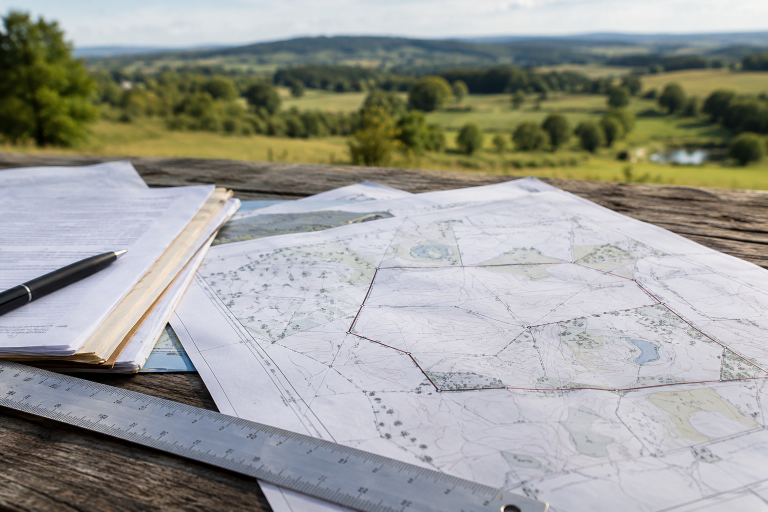
Compare fences, drives, ponds, utility lines, and improvements against the survey rather than assuming visible features match boundary lines. Review title exceptions for utility, pipeline, drainage, access, conservation, or other easements. Ask whether mineral, water, timber, grazing, or hunting rights transfer, and understand that advertised acreage is not always fully usable acreage.
Inspect the House and Outbuildings
A general home inspection is an important starting point, but acreage properties often need feature-specific review. Depending on the property, buyers may also need inspections of the roof, foundation, structure, well, septic, wood-destroying insects, pool, pond, barn, workshop, retaining wall, driveway, fence, and gate.
Match the Land to Your Plans
Write down what the property must support over the next several years. Include animals, a garden or orchard, a greenhouse, shop, guest home, pool, private road, remote work space, or small business. If future subdivision or sale of part of the tract is a concern, investigate feasibility before purchase, not after closing.
Review Taxes, Insurance, and Ownership Costs
The purchase price is only part of the acreage budget. Plan for fence and gate repairs, brush control, mowing, tree work, pasture care, well pumps, septic service, driveway upkeep, propane, pond maintenance, and detached-structure insurance. Tax treatment can also change with ownership and use, so verify the current status and requirements with the appropriate appraisal district. Broad Texas rural land data can provide useful market context, but it should never replace a property-specific review.
Plan the Due-Diligence Timeline
- Before making an offer: Define intended uses, estimate ongoing costs, and identify nonnegotiable features.
- After contract acceptance: Order inspections and request surveys, disclosures, permits, utility information, and service records.
- During the option period: Verify access, restrictions, drainage, insurance availability, title exceptions, and likely repairs.
- Before closing: Review lender conditions, final inspection findings, agreed repairs, and the final title documents.
Printable Acreage Buyer Checklist
- Confirm jurisdiction, restrictions, and intended uses.
- Verify legal access and responsibility for private-road maintenance.
- Review the survey, title commitment, boundaries, and easements.
- Check water, septic, electricity, internet, propane, and trash service.
- Assess flood risk, drainage, soil, and topography.
- Inspect the house, outbuildings, fencing, driveway, and land improvements.
- Confirm taxes, insurance, financing, and expected maintenance costs.
Common Questions Buyers Ask
Is a Home on Acreage Harder to Finance?
It can require additional review when a property includes substantial land value, multiple homes, agricultural uses, or unusual improvements. Discuss the property early with a lender experienced in the intended loan type.
Does a Fence Prove Ownership?
No. Fences can be placed for convenience and may not follow the surveyed boundary. Use the survey and title documents to evaluate boundary questions.
Can Buyers Build Anything on Rural Land?
Not always. Deed restrictions, setbacks, septic capacity, floodplain conditions, utility easements, and local requirements can limit what is feasible.
Conclusion
North Texas acreage living can offer room to grow, work, keep animals, and enjoy the outdoors. The strongest purchase is not simply the tract with the most acres. It is the property that fits the buyer’s access needs, utility setup, maintenance budget, and long-term plans.