10 Proven Health Benefits of Manuka Honey
I’ve read about the health benefits of Manuka honey all over the web, but never went as far as researching where to buy it or how to use it. Honey, to me, has always been a sweeter for foods and drinks, but did you know that they are so many more uses for this magical nectar? Manuka honey is known for its antibacterial properties and is even used to treat wound infections. Yes, you read that right. Wound infections.
Modern medicine is often suspicious of the natural properties of organic products that make big healing claims for themselves. It is right to question anything that sounds good to be true and Manuka Honey is one such superfood that promises amazing results but could potentially be a myth.
What is Menuka Honey?
Manuka is a specific form of honey that is made from European honey bees. These bees forage on Manuka trees that are native to New Zealand, creating a unique honey that has many medicinal properties. These trees have been in the country for centuries and were history part of Maori culture and medicine, used specifically for sore throats, fever, muscle aches and skin care. However, there is skepticism over whether the historical anecdotes are enough to justify Manuka’s increasing reputation as a worthwhile investment in your modern health and wellbeing.
10 Proven Health Benefits of Manuka Honey
- Preventing and treating cancer
- Reducing high cholesterol
- Reducing systemic inflammation
- Treating diabetes
- Treating eye, ear, and sinus infections
- Treating gastrointestinal problems
- Promoting Oral Health
- Soothing Sore Throats
- Improving IBS symptoms
- Acne Treatment
What to look for when buying Manuka Honey
Mánuka Honey is unique to New Zealand and to obtain pure Mánuka Honey is a specialized task for beekeepers. Mánuka Honey is more difficult to extract and has a limited harvest period as it is only collected at certain times of the year. Every spoonful of Happiness is capturing purity and natural goodness from the unique Mánuka nectar.
Not all Mánuka honey is created equal and unique signature compounds in the honey can vary greatly. This is all related to natural environmental factors and including the purity of the sites the bees collected the honey from and strength of the tree. Every jar of Happy Valley UMF® Mánuka Honey is tested and certified for natural MGO & DHA and Leptosperin content. The UMF number tells you how much of these natural markers is in your jar of honey.
Happy Valley UMF® Mánuka Honey is:
- 100% New Zealand Origin
- Tested and Certified for UMF® potency, purity and quality
- Tested to meet MPI Monofloral Guidelines
- Raw and unpasteurised- just as nature intended
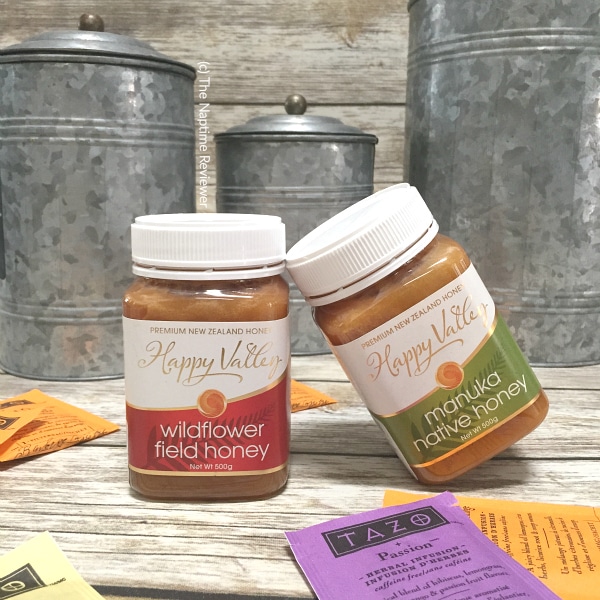
The kind folks over at Happy Valley Honey sent me a couple of flavors of honey to try, including their manuka native honey. I honestly don’t think I’ve ever had honey this good. The Happy Valley honey is thicker than California honey and is much more flavorful. At first glance, the New Zeland honey looks like it’s going to be gritty in texture, but it’s very smooth and thick.
Both of the flavors I tried are amazing on toast, English muffins or on a spoon. Often times I will reach for something sweet if I’m low on energy and honey is a great pick-me-up. When I’m needing a little spoonful of honey, I usually reach for the Happy Valley wildflower field honey. This honey tastes amazing by itself and is not a strong tasting as the manuka honey.