Energy-Efficient Water Heaters: How to Save on Energy Bills and Lower Environmental Impact

Key Takeaways
- Efficient water heating helps reduce utility costs and environmental impact.
- Evaluating performance and using advanced technologies can improve system efficiency.
- Smart innovations and modern upgrades enhance convenience and energy savings.
- Incentives and rebates can make upgrades more affordable for homeowners.
- The right system can be tailored to fit budget, lifestyle, and sustainability goals.
Heating water accounts for much household energy use, so choosing the right water heater is crucial for saving money and promoting sustainability. Whether building new or upgrading, informed choices can lead to significant cost and energy savings. Modern tech and better efficiency ratings offer more options than ever. For those looking to make an immediate impact, exploring water heater installation in St. George, Utah can be a practical first step.
Understanding which heater best fits your needs starts with learning how efficiency is measured, the pros and cons of available technologies, and the variety of rebates and incentives that can make upgrading more affordable. These factors are critical for reducing utility bills, minimizing your environmental footprint, and improving home comfort.
Understanding Water Heater Efficiency Ratings
Efficiency ratings are a key consideration when comparing water heaters. The Uniform Energy Factor (UEF) provides a comprehensive metric for performance, reflecting how well a water heater converts energy into hot water while factoring in standby and cycling losses. A higher UEF rating means the water heater performs more efficiently. For example, heat pump water heaters can achieve UEF ratings of 2.0 to 4.0, far surpassing those of conventional electric water heaters. Consumers can compare UEF scores on the EnergyGuide label or visit the U.S. Department of Energy’s water heating guide for more details.
Types of Energy-Efficient Water Heaters
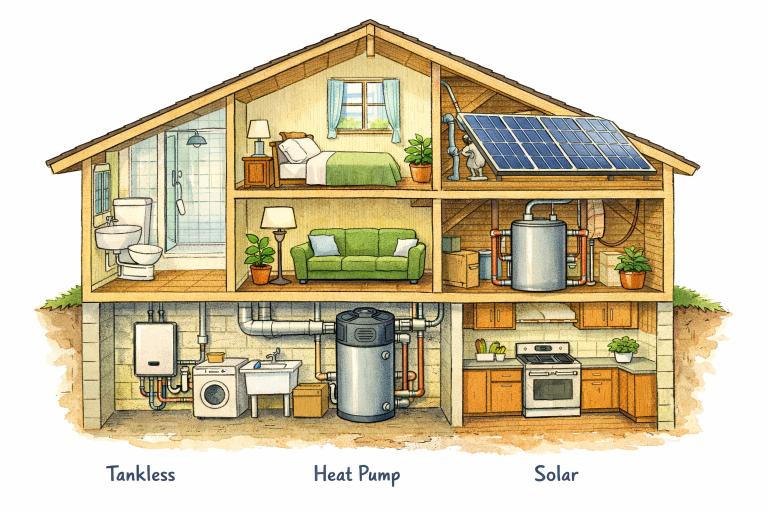
- Heat Pump Water Heaters: By drawing heat from the ambient air, heat pump water heaters use up to 75% less energy than standard electric models. With potential annual savings of around $600 for a family of four, these systems typically recover their higher purchase price within a few years.
- Tankless Water Heaters: Tankless, or on-demand, water heaters heat water only when needed, eliminating standby losses common in storage-tank models. With UEF ratings from 0.80 up to over 0.99, they are widely recognized for their efficiency and compact size. Both gas- and electric-tankless units are available.
- Solar Water Heaters: Using sunlight, solar water heating systems can dramatically reduce energy costs in sunny climates. They are an excellent long-term solution for many homes, but usually require a backup system for periods of low sunlight.
Other Alternative Water Heating Technologies
In addition to heat pump, tankless, and solar options, newer hybrid water heater models are emerging, combining features from multiple technologies for even greater efficiency. These hybrids may use both traditional heating elements and heat pumps, automatically adjusting to optimize performance based on environmental and usage factors. Additionally, condensing water heaters, especially in gas-fueled systems, recover more heat from exhaust gases than traditional systems, thereby improving their overall energy factor. While their upfront costs may be higher, they appeal to homeowners seeking long-term value and the lowest possible operating expenses. For those with existing eco-friendly infrastructure, integrating water heating systems with home solar panels or geothermal heat pumps is another innovative approach that further minimizes a household’s environmental footprint.
Smart Water Heaters: Integrating Technology for Savings
Modern water heaters increasingly incorporate smart features that deliver convenience and savings. Systems with Wi-Fi connectivity can be monitored and controlled remotely, allowing for tailored heating schedules and automatic adjustments based on your family’s usage patterns. Many models provide real-time data and maintenance alerts, making it easier to avoid breakdowns or inefficiencies. Integration with home automation platforms is another attractive feature, streamlining operation while helping homeowners optimize energy use.
Government Incentives and Rebates
To foster greener homes, federal, state, and local governments offer programs that significantly offset the initial costs of energy-efficient water heaters. A standout example is San Francisco’s rebate program, which delivers up to $1,200 in bill credits to residents who install an approved heat pump water heater. Additional savings come from federal tax credits and manufacturer rebates available nationwide.
Practical Tips for Reducing Water Heating Costs
- Lower the Thermostat: Reducing your water heater’s thermostat to 120°F can curb energy use without sacrificing daily comfort. This simple adjustment lowers the risk of scalding while saving money each month.
- Insulate Water Heater and Pipes: Adding insulation to your water heater tank and exposed pipes reduces heat loss, boosts efficiency, and can cut standby energy losses by up to 25%.
- Use Low-Flow Fixtures: Swapping showers and faucets for low-flow models reduces hot-water demand and directly translates into lower energy consumption. According to Livingetc, these fixtures can provide substantial long-term savings.
- Schedule Regular Maintenance: Annual flushing, leak checks, and timely repairs ensure your system runs at peak efficiency and extends its service life.
- Consider Water Usage Habits: Evaluate your family’s daily routines and identify opportunities to consolidate hot-water tasks. For example, doing laundry and dishwashing back-to-back can reduce the frequency of your water heater cycling on and off, thereby conserving energy. Encouraging shorter showers and addressing leaks promptly can also lead to additional savings without major lifestyle adjustments.
Considering the Total Cost of Ownership
The true value of an energy-efficient water heater extends well beyond the sticker price. Energy savings, maintenance expenses, product reliability, and eligible rebates all contribute to the total cost of ownership. For example, although heat pump systems require a higher initial outlay, their impressive efficiency often results in fast payback periods through savings on monthly bills and available incentives. Homeowners should balance upfront costs with long-term benefits when selecting a water-heating solution.
Additional Considerations When Upgrading
When upgrading a water heater, consider not just energy efficiency but also sizing, location, and plumbing compatibility. Oversized units waste energy; undersized ones won’t meet demand. Consulting a professional ensures proper size and placement, which can reduce energy use. Venting and electrical needs should also be evaluated. Regular inspections help catch issues early, maintain efficiency, and prevent breakdowns, ensuring your investment in an eco-friendly water heater pays off.
Conclusion
Efficient water heating is both an economic and environmental priority. By understanding how to evaluate performance, exploring advanced technologies, embracing smart innovations, and taking advantage of available incentives, homeowners can cut utility costs and enhance everyday comfort. With the right approach, every family can find a solution perfectly suited to their budget, routine, and sustainability goals.