Dog Grooming Safety: A 2026 Guide to Calm Handling, Coat Care, and Home Prep
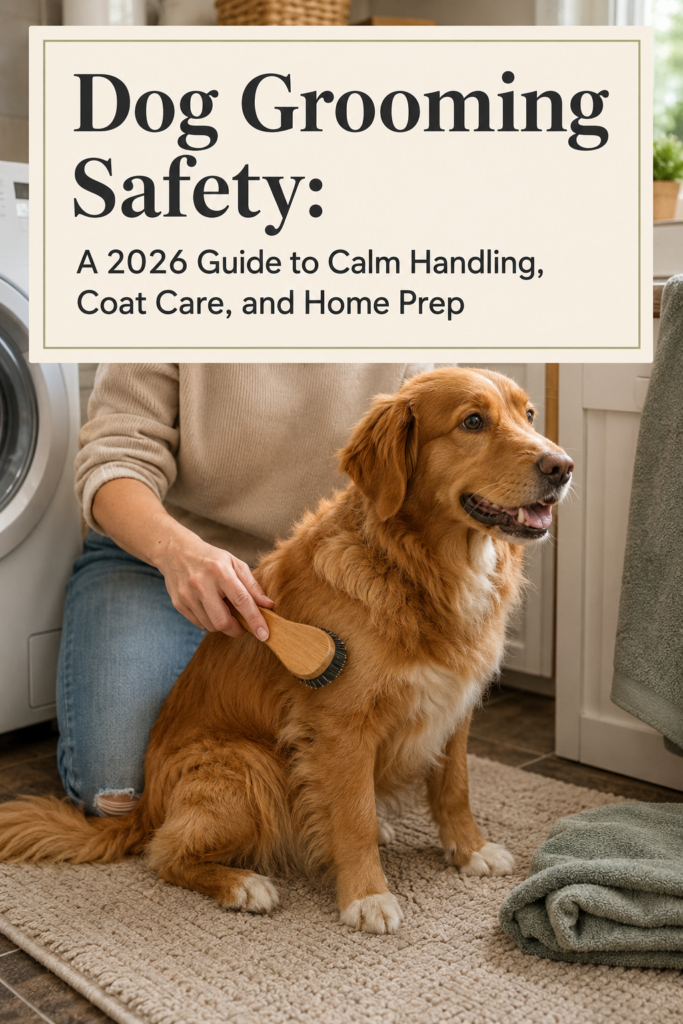
Safe dog grooming is about much more than a tidy haircut. Brushing, bathing, nail care, and coat checks can support comfort, mobility, skin health, and early awareness of changes that may need veterinary attention. The best routine is one that protects both the dog’s body and its sense of security, even if that means leaving a task unfinished for the day.
For owners who prefer one-on-one support at home, Wagmore is a relevant example of a calm professional setup. Wagmore Co provides mobile dog grooming and bathing services, including coat care, nail trims, deshedding, paw care, brush-outs, and haircuts. Serving the west metro Minneapolis area, North Loop, and nearby Twin Cities communities, its mobile format brings professional grooming to the owner’s location, which may help some dogs avoid the added stress of travel and a busy salon environment.
Start With Safety, Not Style
A polished look should never take priority over a dog’s physical or emotional safety. Pulling at knots, rushing nail trims, forcing a fearful dog to stand still, or using unfamiliar tools too quickly can turn routine grooming into a negative experience. Good grooming practices include clean equipment, stable surfaces, dog-safe products, close supervision, and a plan for responding when a dog is uncomfortable or needs a break.
Professional standards also emphasize humane handling, sanitation, tool maintenance, and attention to stress. The AKC’s grooming education standards are a useful reference for the types of safety habits owners should expect from a grooming professional.
Prepare Your Dog Before Grooming Day
Preparation should begin long before an appointment or full home-grooming session. Practice touching your dog’s paws, legs, tail, ears, face, and collar area when it is relaxed. Use a calm voice, brief contact, and rewards that your dog can safely have. The goal is not to hold the dog still for long periods. It is to teach that gentle handling predicts good things.
Let your dog see and smell a brush, comb, towel, dryer, and clipper before attempting to use them. Start with one small step, such as showing the brush, touching it to the shoulder for one second, then giving praise or a treat. Keep sessions short and end while your dog is still comfortable. Several successful two-minute sessions are more valuable than one difficult 20-minute session.
Build a Simple Home Grooming Routine
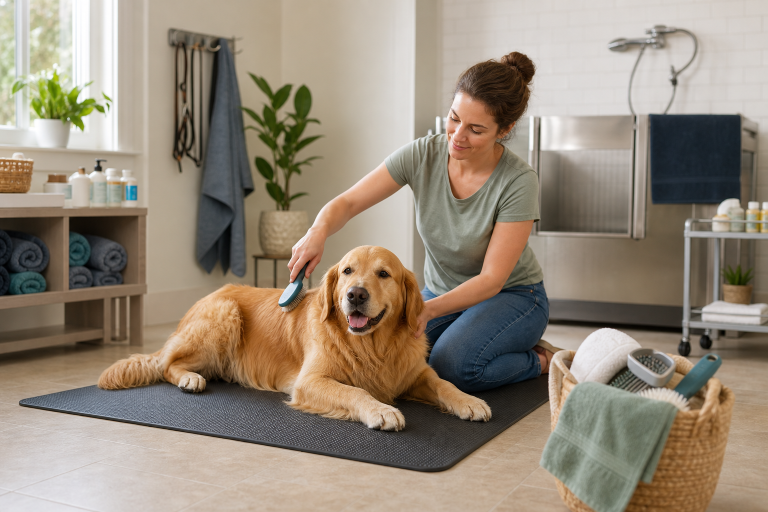
- Check before brushing. Look for tangles, burrs, damp areas, odor, redness, flaky skin, lumps, or tender spots.
- Work in small sections. Hold the hair close to the skin and gently brush from the ends inward. Do not pull a brush through a large knot.
- Inspect paws after walks. Check between toes and pads for debris, irritation, ice, salt, or cracked areas.
- Keep nails manageable. Trim only when your dog can remain reasonably still. Small, gradual trims are often safer than trying to do every nail at once.
- Use dog-specific products. Human shampoos, fragrances, and medicated products are not automatically suitable for dogs. Ask a veterinarian before using a treatment product.
Match the Tool to the Coat
One brush does not suit every dog. A slicker brush can help work through many longer coats, while a pin brush is often useful for longer, flowing hair. A metal comb helps confirm that brushing has reached close to the skin. Rubber grooming tools may work well for short-coated dogs, and undercoat rakes can be useful for some double-coated dogs when used gently and correctly.
Choose tools based on coat type, density, shedding level, and the dog’s tolerance. A tool that skims over a thick double coat may miss the compacted undercoat. A harsh or overused tool can irritate skin or break hair. If the coat is heavily tangled, very dense, or difficult to inspect, ask a qualified groomer for guidance rather than repeatedly brushing a painful area.
Recognize Stress Signals Early
Dogs often communicate discomfort before they struggle. Watch for lip licking, yawning when not tired, trembling, panting, hiding, freezing, pinned ears, wide eyes, repeated pulling away, or attempts to escape. Growling is also an important form of communication. Do not punish it. Instead, stop, create distance from the task, and consider what made the dog feel unsafe.
Cooperative care means giving the dog more predictability and appropriate choices. Let the dog approach a tool, offer a paw voluntarily, or step onto a non-slip mat before continuing. Cornell’s cooperative grooming care guide explains how gradual exposure, positive reinforcement, and staying below a dog’s stress threshold can make handling easier over time.
Make Bathing and Drying Safer
Use a non-slip mat in and around the bathing area, lukewarm water, and a secure setup that does not require your dog to jump from a height. Keep water away from the eyes and inner ears, and rinse shampoo thoroughly because residue can irritate skin. Towel dry first, then introduce a dryer from a distance and at a low, comfortable setting if your dog tolerates it.
Never leave a dog unattended in a tub, on a grooming table, or near an active dryer. Keep airflow moving instead of concentrating heat on one spot. If the dog panics, stop the dryer and return to slower training steps another day.
Know When Home Grooming Should Stop
Pause home grooming and contact the right professional if you find severe matting, open wounds, painful skin, parasites, bleeding that does not quickly stop, sudden sensitivity, or a major behavior change. Avoid cutting mats out with scissors. Matted skin can be pulled upward into the coat, and a sudden movement can cause a serious cut. Clippers also require skill, especially around folds, ears, paws, sanitary areas, and thin skin.
A veterinarian should assess health concerns, pain, skin problems, and unusual lumps or discharge. A qualified groomer can help with difficult coat maintenance and may recommend a simpler haircut or a more frequent schedule that better suits the dog’s lifestyle.
Questions to Ask a Professional Groomer
- How do you handle anxious, senior, puppy, or reactive dogs?
- What happens if my dog becomes too stressed to continue?
- How are tools, tubs, tables, and grooming spaces cleaned between dogs?
- Will you tell me about skin, coat, nail, or behavior concerns you notice?
- What coat length and maintenance schedule fit my dog’s daily routine?
- What handling skills should we practice between appointments?
2026 Dog Grooming Safety Checklist
- A brush and comb suited to your dog’s coat.
- A non-slip mat for bathing and paw care.
- Dog-safe shampoo appropriate for the skin and coat.
- Clean towels and a quiet drying area.
- A nail tool used only during calm, controlled handling.
- Approved high-value rewards for positive practice.
- Your veterinarian’s and groomer’s contact information.
Common Grooming Questions
How often should a dog be brushed?
It depends on the coat type. Short coats may need occasional brushing, while long, curly, or double coats often need more frequent care. Ask a groomer for a schedule tailored to your dog.
What if my dog hates nail trims?
Break the task into tiny steps. Practice paw touches, show the tool, trim one nail if possible, and stop before stress escalates. Seek professional help if fear or struggling is severe.
How can a first grooming visit feel less stressful?
Share your dog’s triggers, medical needs, and handling history in advance. Bring the dog well-exercised but not exhausted, and choose a groomer who communicates clearly about comfort breaks and realistic expectations.
Conclusion
Safe grooming is built through patience, steady routines, suitable tools, and honest limits. The goal is not to complete every task in one session. It is to help your dog feel secure while keeping its coat, skin, paws, nails, and overall comfort in good condition.