Pregnancy Prep Checklist
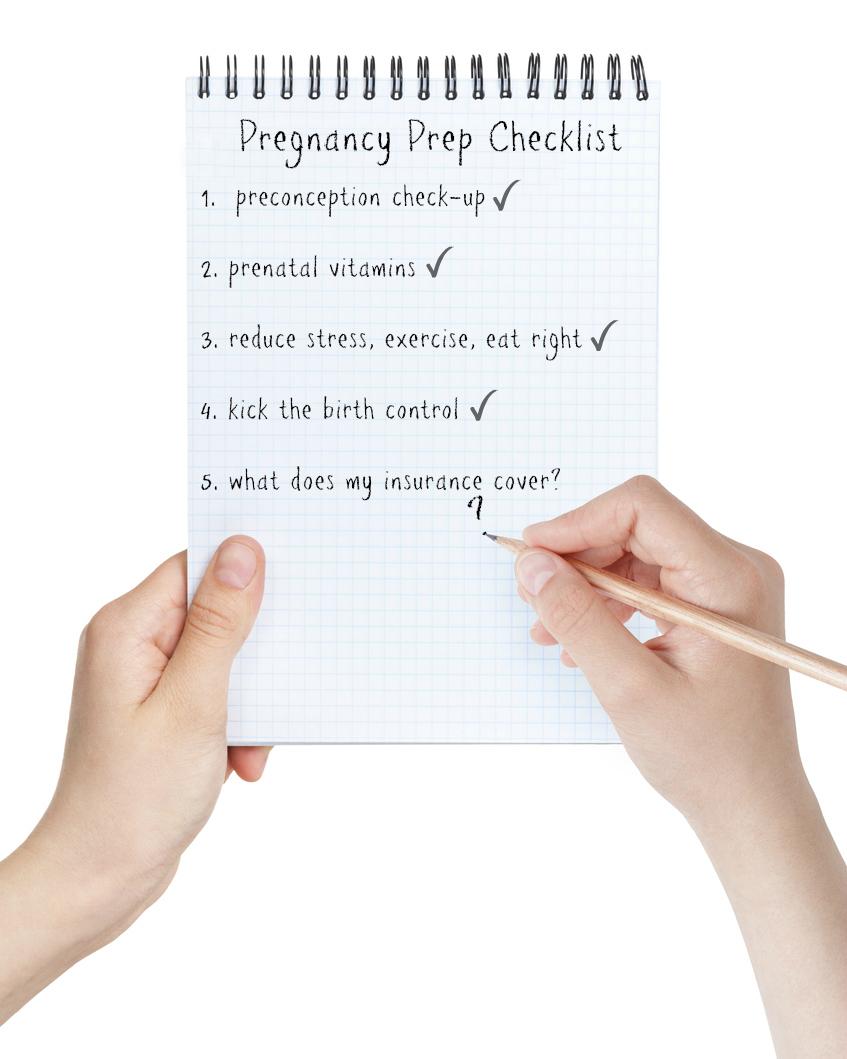
Many couples think that getting pregnant is as easy as bow-chicka-wow-wow, which can be true in many cases; but if you have been researching “getting pregnant tips”, chances are you have encountered lots of different articles and advice. While most of the articles are helpful, they can be lengthy and hard to read, or just plain confusing. In this article, I’ll do my best to break down my pre-pregnancy recommendations that I have gathered over the years.
Before trying to conceive (TTC), I recommend you do a few things first:
1. Visit the doctor.
The first thing I recommend all women do before trying to conceive, is to schedule a doctor’s visit to make sure that your body is healthy enough for pregnancy. Many of us adults only visit the doctor when we’re sick, meaning that we might be due for a wellness check, PAP smear or physical.
Some of the things your doctor will check during a preconception visit:
-
Family history
-
Lifestyle
-
Mental, social and emotional health
-
Vaccination history
-
Medical history (allergies, medications, exercise, etc.)
-
Blood test
It would be a good idea to have a little cheat sheet with any family history of birth-related problems, birth-defects, conception troubles, miscarriages, etc.
Also, be sure to schedule a check-up with your dentist to ensure that your oral health is in tip-top shape.
2. Start taking a prenatal vitamin with folic acid.
One-to-two months before trying to conceive (TTC), many doctors and medical professionals recommend that you start taking a vitamin that contains at least 400 mcg of folic acid.
Why do we need Folic Acid?
Because most of our diets don’t contain enough natural folic acid (from brussel sprouts, avocados, other dark green vegetables, nuts, etc), a prenatal supplement is the easiest way to get our recommended daily dose. Folic acid is recommended to help reduce the risk of your baby having a neural-tube defect such as spina bifida. Taking a prenatal vitamin before, during and after your pregnancy can be beneficial for you and your baby.
If you have trouble swallowing pills, consider a prenatal vitamin that is easy to swallow, such as a gel-capsule. Also consider a supplement that is a multi-vitamin, so that you don’t have to take more than one pill per day (see tip #3).
3. Take care of yourself.
Decreasing your stress levels, eating right and exercise are just some of the ways that we can take care of ourselves. Remember not to think or stress too hard about trying to get pregnant, as this can do a number on your mental health, confidence and relationship.
Exercising at least thirty minutes per day, eating healthy (without changing your eating habits too drastically), and supplementing your DHA, iron, Vitamin D3 and folic acid intake are all ways we can improve our mental and physical health.
Why do we need DHA?
DHA is a good form of polyunsaturated fat found in all tissues of our body. It is not only beneficial for our brain, vision and bodily function, but it is also great for our developing fetus.
Choose your beverages wisely!
If you love caffeine and the occasion (or often) alcoholic beverage, now is the time to make a change. Reduce your caffeine intake and cut out your adult beverages. A trick for reducing my caffeine intake, was to slowly start mixing decaf. coffee with my regular coffee, adding more decaf. every few days until I was drinking straight decaffeinated coffee. Increasing my exercise, sleep and water intake helped make up for the lack of energy I was relying on coffee to give me.
Kicking your smoking and drug habits is a must, as well. If you have a hard time, be sure to ask for help from your physician.
4. Ditch your birth control.
Talk to your healthcare professional about the best way to cut out your hormonal birth control. For me, it was as simple as discontinuing the pill and waiting a few months for a normal, predictable cycle.
Once a predictable menstrual cycle formed, I was able to track when I was ovulating, which made it easier to get pregnant.
5. Consider the cost of birthing a baby.
I can go on and on about the cost of raising a baby (diapers, wipes, clothes, food, etc.), but many fail to consider the cost of actually birthing a baby. If you have medical insurance, check with your administrator to see how much it will you cost you to have a baby – pay your doctor, stay in the hospital, cover any emergencies like a C-section, NICU, etc.
When I had my first daughter, I was covered under my insurance, my husband’s insurance plus a supplemental tertiary insurance. We were overly prepared (or so I thought), but we still ended up paying thousands out of pocket. When I had my second daughter, we had better insurance coverage and only ended up paying $250 out of pocket.
There’s also your first post-natal check-up to think about, your baby’s first check-up and every subsequent check-up after that. Be sure to consider the cost of copays.
Remember…
For many families, getting pregnant is not as easy as it seems like it should be. As I mentioned before, try not to stress about it too much. Stressing about getting pregnant can strain your relationship with your significant other and can leave each of you feeling responsible if you get a negative symbol on a pregnancy test.
Share this:

Discover more from The Naptime Reviewer
Subscribe to get the latest posts sent to your email.


Yes, I do take a daily multi vitamin.
Yes! I take womens one a day
Yes I take a prenatal everyday.
Yes, I take multi-vitamin every day
Thank You for the chance
Fiona N
I do take a daily multivitamin!
skkorman AT bellsouth DOT net
Yes, I've been taking a multivitamin every day for a long time now!
I don't now, but I did when I was pregnant and nursing.
I used to, but I didn't buy any more when they ran out.
I take a prenatal vitamin every day.
I do take a daily multi vitamin.
I absolutely take a daily multi-vitamin.
Yes, I currently take a multivitamin.
I do take a daily multi-vitamin.
Yes I do!
I take a multi-vitamin everyday. A gummy one to be exact!
I do take multivitamins daily.
Yes, I try to, but I have a lot of other supplements to take so sometimes I forget!
Yep!
Yep – I have my once daily multi-vitamin! (liz n)
Yes, I'm currently taking a prenatal each day!
Yes I do!!
Yes I take a multivitamin daily.
Yes I take a prenatal and a DHA supplement since I'm pregnant.
Yes, I take a multi vitamin for women.
I try to take a vitamin, but I often forget.
I do, when I remember.
Yes, I take multivitamins
I don't.
Not yet!
yes I take a multivitamin daily, as everyone should regardless of ttc!
Yes, I take a Multi-Vitamin every day.
I don't currently take vitamins, but I am planning to start taking them.
Yes, I take a prenatal vitamin.
No I don't right now
Yes, I do take a multivitamin.
I do take a daily vitamin. I also take some other supplements for joint health.
yes! take my prenatal vitamins everyday!
I try to take a vitamin daily, but usually forget. My iron tends to run low.
I try to take a vitamin daily, but usually forget. My iron tends to run low.
yes, I do
Yes, I do.
I do but not daily. Four or five times a week usually.
Yes I take daily vitamins.
Thanks for the contest.
slehan at juno dot com
I sure do!
I do take a multi vitamin daily, usually at night before I go to sleep! 🙂
I take prenatals daily!